I have the solution to mankind’s problems

Notice the Japanese character on the screen next to Mr. Gamble? It’s pronounced ai (or I) as in the word aikido, the martial art that uses an opponent’s energy to defeat him. Interesting that, by itself, it means “to meet” and is also part of the word for community. Then, there is its homonym, another character pronounced ai, that means love. Kind of cool that Ai have the solution to all of mankind’s problems, isn’t it?

1stvillager's avatarthe Village on Sewanee Creek

For almost six years now, my wife and I have labored to build a community called the Village on Sewanee Creek.  I’ve documented our journey towards self-sustaining community on this blog.  It’s been a fertile time for such an endeavor.

The world seems to be falling apart at the seams.  The poor and middle class get poorer while the rich (1%) get richer and more powerful.  Global economies are in disarray.  There is rioting in the streets of London, Cairo, Paris…  Never mind.  It’s easier to ask what major cities don’t have riots or mass demonstrations.  The world grows more polluted or depleted.  Inflation for basic commodities like food and energy is up while the value of houses and 401k’s is down.  Food is GMO, with less nutrition but more antibiotics, chemicals and other questionable stuff.  Overhead, there are chem trails.  People worry about nuclear radiation from Fukushima.  9/11…

View original post 389 more words

What will it take to THRIVE?

For almost six years now, my wife and I have labored to build a community called the Village on Sewanee Creek.  I’ve documented our journey towards self-sustaining community on this blog.  It’s been a fertile time for such an endeavor.

The world seems to be falling apart at the seams.  The poor and middle class get poorer while the rich (1%) get richer and more powerful.  Global economies are in disarray.  There is rioting in the streets of London, Cairo, Paris…  Never mind.  It’s easier to ask what major cities don’t have riots or mass demonstrations.  The world grows more polluted or depleted.  Inflation for basic commodities like food and energy is up while the value of houses and 401k’s is down.  Food is GMO, with less nutrition but more antibiotics, chemicals and other questionable stuff.  Overhead, there are chem trails.  People worry about nuclear radiation from Fukushima.  9/11 and other false flag events enabled the Patriot Act and other constitutional abuses.  The TSA gropes us at airports and now searches bus riders and blocks highways.  Obama’s health care bill is loaded with power-grabbing provisions that have nothing to do with health, but it does a great job of paying off the big insurance and pharmaceutical corporations.  Gun and ammunition sales are at an all-time record pace.  And nobody trusts a government that has gone stone deaf to the governed, but brazenly lines its pockets from the public trough and corporate grease.  Corruption is epidemic at every level.

In the midst of all this, we the people, are divided.  Despite accusations from aspirational, hard-working conservatives, it’s not all about lazy liberals who demand a hand-out.  Nor is it just about greedy, heartless conservatives who refuse to pay reasonable wages or their “fair share” of taxes.   I count myself among conservative libertarians, but hope to have the heart of a liberal without resorting to government theft for th0se in need.  See my comments on “I like Liberals”.

It’s about something much larger going on while we squabble over the diversions.

In this blog, I have maintained that the answers are in individuals coming together, living with less greed, more honesty, more charitably, working hard and keeping what we earn.   We have to rebuild local communities where there is trust and relationships flourish.  Freedom is won and retained by people who are prepared to assert their freedom by being less dependent, especially on government.  All that is hard work, swimming upstream against a putrid popular culture that is super-saturated with gratuitous violence, sex and greed.

So, forgive me if I am sometimes overwhelmed with feelings of impotence.  I feel like I’m preaching to a very small choir (maybe a quintet?) and ignored by the masses.  So, when I discovered the video, Thrive, it was a breath of fresh air.    While I can’t vouch for its free energy solutions (simply not qualified to comment), the rest is spot on.  I love what it has to say about taking back control of our country and the world.  If you haven’t seen this one, please watch it.  There is a lot of information here.  Well worth your time.  I’m adding it to my list of “Top 100 Movies for Troubled Times”.

The fruit (and vegetables) of Sharing

Several years ago, I built a 2,000 square foot greenhouse on our land so we could grow food for our family all winter long.   We had gardened successfully on the same spot in prior years.  Greenhouse gardening was new to us.  It took a while to figure out what to grow and how to grow it in the winter season, but last winter we determined to fill it with cold tolerant vegetables and not heat it at all other than the free solar daytime heat.  We knew it would have too much capacity for us to use, so we invited other Villagers to share in the work and the produce.   We dined all winter long on fresh cabbage, carrots, kale, spinach, beets, lettuce, radishes, onions, broccoli and cauliflower.   We worked together in the greenhouse and later making sauerkraut from the bumper crop of cabbages.  Delicious.  But the best payoff was in relationships.

I want to share an email that my wife, Becky, just received from Judy (cc to me).
It gladdened my heart to see the fruits of sharing.  Sharing:

  • Transforms relationships.
  • Demonstrates trust and love.
  • Stimulates generosity in return.

The Bible teaches,

“Cast thy bread upon the waters: for thou shalt find it after many days.”   Ecclesiastes 11:1

When I was a child, I used to wonder, “so who wants soggy bread?”    🙂

Here’s the answer:

Hi Becky,
 
I finished filling my kraut-bucket with cabbage today, and wanted to say thank you for sharing the produce from your greenhouse.  Although we spent a few hours there planting/thinning/weeding, our reward has been greater than effort expended.  Not to mention that it is your greenhouse, your seed, your water…  
 
I’ve been wondering how you determine what is fair when it comes to sharing the fruits of our labors.  I don’t want you to feel that we are taking too much advantage of a good thing!
 
My concern is that things not go to waste because there isn’t time or energy to harvest what was planted.  I am willing to help you put up the vegetables–as an additional ‘payment’ for what we receive.  For example, I’ll chop your cabbage and bottle it (you provide the jars); the finished product is yours. Maybe I can help get the last of the beets bottled…  I know you have MANY other things that could be occupying your time.
 
Please don’t hesitate to let me know what I–and Tom–can do to best help keep things moving along!
 
-judy.

Thank you Becky and Judy and Tom and George for your example to us all.

Top 100 Movies for Troubled Times

The Art of Manliness is an outstanding website for men.  It features traditional values and advice on how to be a real man. Here is their list of the top 100 essential movies for Men.  I own and love most of the movies on the list, but there isn’t much there for women, nor are all it’s movies essential for our troubled times.  Soooo…..

Many years ago, I was Director of International Development for Blockbuster Video. That was in the days before Blockbuster was made obsolete by the internet, Netflix, Red Box, VUDU, Youtube, etc. We were goin’ and blowin’ then. I digress.  The point is, I developed a love for great movies.  Years later, that led me to put in a good sized dedicated home theater with a performing stage in our home in Atlanta. We had many wonderful experiences with other families and their kids, either watching and discussing great movies or making up and performing plays and reader’s theater on the stage.

One very special memory is of a teaching moment when I sat all my kids down to watch the movie, Gandhi. I kept the remote in hand.  After each significant scene, I paused the movie and we taught and discussed an important life lesson. Gandhi is a long movie.  With discussion and some breaks, it took a good part of the day to get through it. The time could not have been better spent. It’s times like those that I am most proud. Times that paid great dividends in the lives of my now adult children.

Those experiences led to my commitment to build the amphitheater stage with outdoor theater in the Village. The physical facilities are there and we have enjoyed movies under the stars many times, but my dream is, as yet, unfulfilled. So far, the theater has been used mostly for entertainment. I miss the deep discussions. I’ll keep looking for those opportunities to learn and share like we used to with our kids and close friends in Atlanta.

This brings me back to the top 100 movies for men list. It occurred to me that we should develop a top 100 list for the Village.  Not sure what we should call it yet. Maybe something like the “Top 100 Movies for Troubled Times.”  It should be made up of movies that:

  • Teach about character and positive values (either through positive or negative examples showing consequences of bad choices).
  • Provide perspective for our troubled times (Dealing well with adversity.  History is a great teacher of perspective as we repeat past mistakes.)
  • Give us strength and courage to persevere in difficult times.
  • Show great role models for healthy social interaction – How to treat one another with dignity, respect, trust, and love.
  • Teach practical solutions to real problems. Time proven survival skills and strategies.
  • Give inspiring examples of freedom-loving people with an independent spirit; people who are self-reliant, hard-working and willing to fight for their freedom.
  • Inspire us to be better,do more, be more creative and stronger.

.

.

I’ve already done a top 80 list from my personal catalog,
but then it’s just my list.   I could use some help getting to the best 100.
All you “like-minded” people out there, post a comment with your top 10
or more.
I’ll take the best from your lists, combine them with mine and share the best of the best.
As a starter, here are 10 that I think should make the list

.

Gandhi (no surprises here)

It is impossible to capture the life of any man in one film, much less the life of a man who saw and did as much as Mahatma Gandhi. Thus the filmmakers who tried to capture his life on the silver screen sought not to give a blow by blow account of Gandhi’s life, but instead to capture his spirit in what they did show. The film begins with Gandhi’s assassination and then starts the retrospective of his life, beginning with his being thrown off a train for being Indian, and through his non-violent efforts to win Indians their rights and then their independence. One man truly can free an entire nation, if not change the entire world.

Best line: “They may torture my body, break my bones, even kill me, then they will have my dead body. NOT MY OBEDIENCE!”

.

Defiance

Jewish brothers in Nazi-occupied Eastern Europe escape into the Belarussian forests, where they join Russian resistance fighters.   They provide leadership and protection to about 1,000 Jewish non-combatants who have fled to the woods, build a Village, learn to survive and fight off the Nazi army.

.

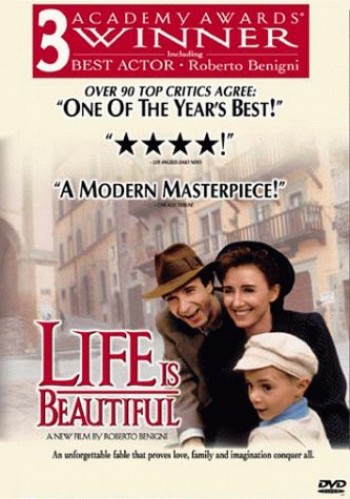
Life is Beautiful

With humor and an indomitable, positive attitude, a Jewish man wins the love of a beautiful woman.
With inspiring courage and discipline, he must call on the same qualities to protect his son in a Nazi death camp.

.
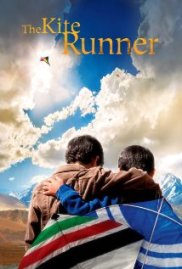
The Kite Runner

After spending years in California, a soft and pampered Amir returns to his homeland in Afghanistan to help his old friend Hassan, whose son is in trouble.  It’s a story of sacrifice, deprivation and danger as he risks his life against a deeply corrupt and depraved regime.

.

Groundhog Day

On it’s surface, Groundhog Day is just another comedy. But if you delve deeper, you’ll find a story that drives home some profound messages. Bill Murray is Phil Connors, a cynical egotistical weatherman who annoys just about everyone and gets stuck living the same day over and over. It’s Groundhog Day. We don’t know how long Phil is stuck in this purgatory of repetition. Maybe a month.  Maybe a thousand years.  From Phil’s plight we learn that real change in life can only come from within us.  It’s a movie about the slow and agonizing process self-improvement, known in some circles as repentance.

Best line: “I’m a god.” “You’re God?” “I’m a god. I’m not *the* God… I don’t think.”

.

Cover of

Sommersby

Set in the deep south immediately after the Civil War, Laurel Sommersby is barely surviving, working the farm without her husband Jack, who is believed dead in the war. Jack Sommersby was an abusive, coarse man, so his return is unwelcome to Laurel, who has been seeing another, kinder man.  But Jack has changed a great deal.   Some, especially Laurel’s suitor, believe that this is not actually Jack but an imposter. Laurel herself is unsure, but takes the man into her home and learns to love him.  This is a story of reformation, integrity and supreme sacrifice under conditions of extreme poverty.

.

Ikiru

A Japanese bureaucrat tries to find meaning to his life after he is diagnosed with terminal cancer.  He must learn courage and take up a  respectful, yet dogged struggle against the bureaucracy to right previous wrongs and injustices.

.
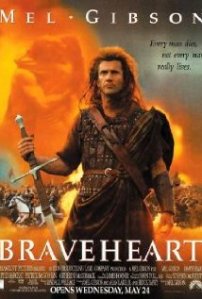
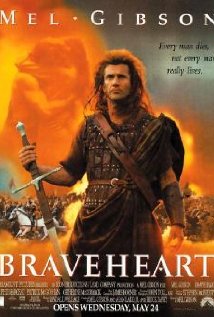
Braveheart

Mistake #1: Primae Noctis? Are you crazy, Long Shanks?
Mistake #2: Slicing up William Wallace’s woman? Are you asking to get your fort burned down? Never hack off a Scotsman.
Mel Gibson’s portrayal of the battle painted warrior poet William Wallace is easily one of the greatest heroes in all of movie history.

Best line: “Every man dies, not every man really lives.”

.
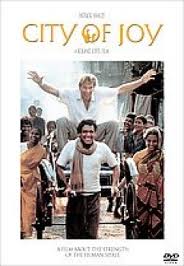
City of Joy

Dr. Max Lowe (Patrick Swayze) abruptly deserts his practice as a surgeon and falls into depression.  He flees to Calcutta, India to lose himself, but finds Joan Bethel, a local social worker and discovers the joy of unselfish service and a life with meaning.  He makes friends with a family in desperate need.  Hazari Pal and his family are desperately poor, having been swindled out of all their money.  Hazari takes a job working for a local godfather, but things go from bad to worse.  Dr. Lowe finds himself in the middle of brutal suppression.  He steps into the breech to defend Hazari’s family at great personal risk.

Best Line:  “How long are you going to keep drilling holes in the ocean?”

.
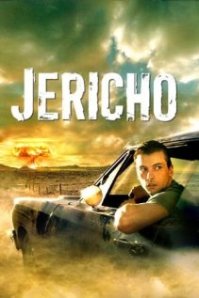
Jericho (TV Series)

A series of terrorist attacks leaves the US in a state of disaster.  The small Kansas town of Jericho must come together to deal with a new reality.  Along the way, they unravel a massive government conspiracy, organize a militia, fight off desperate neighboring towns, but most of all, learn to trust and work with old friends and rivals.
It’s TEOTWAWKI.  Deal with it!

.

.

.

Sharing, teaching and reinforcing positive values through the arts can make our Village(s) better prepared for times that are tough or even if they’re not.

 

A Different Sort of Courage

Common wisdom: Courage is assertion in the face of risk.

But sometimes, courage requires us to shut up when we disagree, let others express themselves without interruption, and still others to carry the burden of my debate.  To trust that truth may lie outside my own consciousness, that it will only be revealed by others is to trust in the worthiness of opponents, friends and strangers.

The courage of humility is to wait, to hope, to listen.

The fruit of Courageous Humility is Uncommon Wisdom.

Insect Control with Chickens and other Life Lessons

Experience has taught us that the “organic” approach to gardening can be really hard if you are determined to be a purist.  There certainly are benefits to limiting the amount of pesticides and artificial fertilizers by using organic methods.  But, as in just about everything, the old saying,

Pesticide Warning Sign

“moderation in all things” works here too.  I like the way this guy says he integrates organic methods (chickens) with non-organic (bug lights and pesticides) when necessary and he doesn’t apologize for it.  I also like his philosophy of letting the chickens have some of his produce in exchange for their help in keeping the bugs down.  But, at the same time, says he manages them so they don’t take too much.  It’s a comfortable alliance.

The older I get, the more I’m convinced that there are many different solutions to any given problem.  When we become dogmatic, we shut out new learning and alternative solutions.  When we’re open, that’s what I call humility.  When something isn’t working or even if it is, keep trying and learning.  If you persist with faith and humility, solutions open up and things get easier.  Each year, our garden has become more productive and a little easier (that is until we expand to the next phase and take on new problems or new problems arise on their own).

My garden and my chickens keep teaching me things.

Isn’t life good?

Survivalism in an Honor Culture

I dislike the term “survivalist”. Too much attached baggage that doesn’t fit me or the Village. I have gravitated more to the term, “prepper”, but with all the History Channel and other mass media extremist hype around that word it seems that it is also taking on the same extremist connotations. Maybe it’s time to find another word that is less tainted. Difficult. People who think even a little differently from the masses are always branded as extreme.

Nevertheless, if you strip out the extremist connotations, survivalist will have to do for now. I doubt that many people would reject the notion that survival

Human brain parts during a fear amygdala hijac...

is a primal instinct of not only the human species, but all life. I recently saw research that suggests strong memory recall is largely associated with experiences where the most primitive portion of the brain, the amygdala, is alerted to a sense of danger and there’s an extra shot of adrenalin. That causes a large number of synapses to fire and indelibly records the event in memory.
So, efficient memory is connected to danger and survival instinct? Cut to the chase. Everyone is a survivalist at multiple levels, even the mental/intellectual level.

OK, so maybe it’s a bit of a jump, but to read my stuff, you’ll have to get used to it. While I don’t have a great memory, I do connect seemingly unrelated things to come up with unusual conclusions.

I’m currently reading Outliers, by Malcolm Gladwell. It’s a book about counter-intuitive success models. Sort of a cross between the massively popular Freakonomics and traditional Horatio Alger success stories. In it are several chapters that have caused me to think about the Village, self-sufficiency and survival in a different light. One chapter deals with the Culture of Honor found in Appalachia.  This honor culture is at the root of inter-family feuds (Hatfield-McCoy) and intra-family violence. After discussing the historical roots of Appalachian culture, one particular paragraph stands out.

Survival isn't necessarily about guns.

“The triumph of a culture of honor helps to explain why the pattern of criminality in the American South has always been so distinctive. Murder rates are higher than in the rest of the country. But crimes of property and “stranger” crimes – like muggings are lower. As the sociologist John Shelton Reed has written, “The homicides in which the South seems to specialize are those in which someone is being killed by someone he (or often she) knows, for reasons both killer and victim understand.”

Murder rates higher than the rest of the country?! For someone with a strong survival instinct, that might put one on notice that this is a dangerous place to live. But, finishing the rest of the paragraph,

“The statistics show that the Southerner who can avoid arguments and adultery is as safe as any other American, and probably safer.”

Interesting conclusion. In a community like the Village on Sewanee Creek that embraces good family values (anti-adultery) and seeks harmony between neighbors, people should have the disposition and capacity to “avoid arguments”. If you don’t, you should probably re-think coming to live here, as your survival rate outside Village borders might be statistically impaired.

This observation feels intuitively correct to me, as a transplant to Appalachia.  Having struggled to understand and adapt to the local culture, I feel very safe here, safer than I have felt in many of the places I have lived. Part of that has to do with the fact that my indigenous neighbors are less affluent country folk who have lived off the land for generations and still have the old-time skills that are lost to most of modern society. But, on another level, it’s a place that actually makes sense from a personal security standpoint. Random violence, typical of urban environments is rare here. Be nice and people are nice right back to you.

For people who think a lot about survival, as in getting out of the big cities, storing food and ammo for if/when TSHTF, I suggest there is a much more important consideration. Cultural Survivalism, especially in an honor culture suggests you need to make yourself part of the community and avoid inappropriate behaviors that put you at risk. Stated more positively, follow Biblical advice such as the golden rule and “Agree with thine adversary quickly, whiles thou art in the way with him”  Matthew 5:25

All that comes back to building a strong sense of harmonious community whether within the Village or the larger indigenous community.

Self-Sufficient Community – An Oxymoron?

Socrates put it well, over 2000 years ago:

A community starts to be formed when individuals find that they aren’t self-sufficient.

Does that mean our goals at the Village are mutually exclusive?  I don’t think so.  Each person starts with a deep desire to become self-sufficient.  We struggle to do all we can towards that end.  At the point of realization (whether early or late) that self-sufficiency in isolation is extremely difficult, our desire for community is enhanced.  If/when times become even more difficult, communities naturally coalesce.  And that’s a good thing.

A wholesome balance between independence and inter-dependence must be built first on a foundation of strong independence.  When individual strength is tempered by humility born out of adversity, the soil is prepared to grow a rich and fulfilling harvest.

The process can be long, requiring patience.  We’re here for the long haul.

The Christian Prepper’s Dilemma

Once again sharing portions of a dialog from the Village’s private board, “Friends of Sewanee Creek”.  Commenter, John (name changed), is a friend of the Village, but not yet a Villager.

Grant Miller shared an article on 01/31/2012 10:57:49 am.
I don’t like labels, but I guess I’m a prepper. My parents were preppers before there was such a word. Back then, they just called it frugal, hard-working, forward thinking and innovative. I’ve been a prepper all of my life, but really got intense about it 6 years ago when I started this project. Being intense always risks burnout, so this blog hit home. You can read the original here.

______________________________________________________________________________
Avoiding Prepper Burnout

Ever look at your efforts in preparedness and think to yourself – “Self, is this all just a waste of time?” Ever think about the hours spent reading blogs, visiting preparedness forums, and making plans and consider that all of that time could have been spent doing something more “important?” I mean – that awesome AR-15 that you finally got off of layaway could have afforded the family a nice vacation to the beach.

Is it really worth it?
If you think this way, guess what? Your human and not alone. It’s OK. It’s called “prepper burnout” and it happens to the best of us.

Prepper Burnout can arrive for several reasons:
1st – Nothing happens. That’s right – all your planning and food storage and the world around you just seems to not collapse. Of course that is good. It is absolutely fortunate however it gives non-preppers a lot of ammunition to poke fun and insinuate that your preps are a waste of time.

2nd – Money. Maybe would better stated as “Not enough money”. So many of us are struggling to not just pay bills, put food on our plates and gas in our cars – but we are also trying to stock up on preparedness supplies at the same time. When times are especially tough it is easy to redirect priorities and the corresponding funds to other things and say, “screw preparedness”.

3rd – Lack of Time. In many peoples lives so many activities and distractions take up valuable time and challenge many to find more time to spend on “prepping”. For many of us – prepping is easy to push to the bottom of the priority list and sweep under the rug.

There are many more reasons why some people just get sick (and tired) of prepping.

So what can be done about it? Take a break!! Yes – just take a break from prepping for a week or two – the world won’t come to an end (at least we hope not). Spend time with the family. Do something fun like bowling or go to a couple movies. If you have a hobby that maybe you have not had done in a while – go for it. If possible, have a family meeting and ask everyone else what they would like to do. Money does not have to be spent to relax and have a good time. Visit a park and bring a picnic lunch. Make Saturday a “vegetable day” – meaning that you will become a couch potato and watch movies all day. Invite some friends over and have a cookout. Whatever is chosen – have fun and forget about prepping for a bit.

Preparedness Goals?

Often while taking a break from prepping your mind will start to come back around and preparedness goals will begin to come into sight. It is at that time to throw in your favorite apocalyptic movie – get out a pad of paper – and write. Write some preparedness goals that you want to accomplish. Possibly you may think about getting ready for spring gardening. Start a list of gardening “things to do” to start in early spring. Get it out of your head and on paper.

If money is short do some things that are inexpensive or free. Go to your local dollar store and stock up on some really inexpensive but valuable preparedness supplies. Spend a day scouring the Internet for good info and maybe print some out to place in a “survival information binder”. Ask a friend who has a particular skill that you want to have teach you. Maybe even perform a complete inventory of your stockpile and enter everything in a spreadsheet.

We all get burnt out sometimes. Just realize that it is OK and take steps to refresh, reload, and regenerate. Often you will come back re-energized and better focused on your preparedness goals.

Take care all –
Rourke

_______________________________________________________________________

John – 01/31/2012 10:04:35 pm

Prepping is a bit like subscribing to same type of logic that underlies Pascal’s wager on the existence of God. From what I have read on this forum though, prepping has become an opportunity for exploration and discovery. Sounds exciting to me…not a reason for burnout.

I have seen a lot of prepper shows on TV as well as websites and I wanted to ask a question related to something you wrote above, Grant.

“that awesome AR-15 that you finally got off of layaway could have afforded the family a nice vacation to the beach. ”

A large proportion of preppers seem to be people of faith. On this site I have come across Christian references so I assume that many in the community take Jesus as their lord and savior. I also have noticed that the majority of preppers are well armed and are prepared to protect themselves and their families from any potential dangers that might confront them.

But, what is the plan if a prepper community is not confronted by a band of marauding ne’er do wells, but rather a large group of starving families? Would these Christian preppers unleash the hounds and machine guns on a refugee population of starving children to save their food stores? What would Jesus or the values of the New Testament suggest the appropriate plan of action be?

There is a concerning amount of violent undercurrent which pervades many prepper networks and communities that is of great concern to me. There is almost a perverse desire in certain cases to welcome the coming of the apocalypse, or so called cleansing.

In my opinion, what many prepper communities are doing (especially the undertakings that I read about on this blog) should be a model for the greater country as I believe that they are directly confronting the issues of sustainability which in my mind will be the most pressing issues of our lifetime. The image of preppers should be more open arms and smiles and less AK-47’s and land mines.

At the end of the day, I don’t know if I would be able to reply to a legitimate and honest cry for help with the cold response of a machine gun round.

_________________________________________________________________________________________

Grant Miller – 02/01/2012 07:31:24 am

John, as usual, you go to the heart of the matter.

First, let me clarify. I didn’t write this piece. I shared it from another blog, so I don’t own it. Having said that, I would be dishonest if I did not admit to having invested in self-defense measures.

But, underlying a genuine and realistic need to be prepared to defend oneself against evil forces, there is, as you say, a deeper need to prepare to be a part of the solution for those who are genuinely in need. The answers to this dilemma are not easy.

On one hand, no amount of preparation and industriousness (putting back food and water, growing food, becoming energy self-sufficient, etc) would be adequate if the community is over-run by people in need. Years of work and preparation to feed one’s own family could potentially be wiped out in a day, as would one’s ability to assist others in need through a desire to lovingly share.

On the other hand, there is no indication that Christ was a “prepper”. He lived day-to-day, grateful for His daily bread. Having little in the way of material goods, He and his disciples gave what they could to the poor, which was probably also very little even though it was much relative to what they had. The Bible says that Judas was the keeper of the purse and there are a few references to discussions about giving to the poor. One such comes to mind when the controversy arose about Christ being anointed with expensive ointment prior to his crucifixion. Jesus, in defense of this extravagance replied, the poor are always with you.   Mark 14  It would seem from this that Christ recognized that there are inexhaustible physical needs that are beyond our ability to satisfy and that one must choose wisely how to allocate physical resources. But the allocation of physical resources was not at the core of Christ’s teachings. He repeatedly stated that His Kingdom was not of this world, not physical in nature. The abundance of what He had to offer was spiritual and far more important than the physical. It was the healing of the spirit and the body.

It is difficult to visualize all scenarios a prepper or a Christian might be faced with. I certainly want to be among those who would generously share with those in need. From discussions I have had, I am confident that all others who are invested in the Village feel the same. But I also want to protect and provide for the ones I love most. So, I suppose that, in a dooms day scenario where there is mass starvation, I would try to carefully choose between those who are non-violent and in need and those who are out to pillage. An armed mob bent on taking what I have diligently put back would be met with the best defense I could muster. But I would do my best to “give this day, of our daily bread” to the extent that I do not endanger the welfare of those in my personal stewardship.

My favorite play is Les Miserable, based on Victor Hugo’s monumental novel. The pivotal moment that sets the stage for everything else in the story is when the Priest gives all of the Church’s silver to Jean Valjean who has stolen a portion of it. Through this singular act of charity, the convict Valjean is transformed to a Christian life of giving. This example of Christian charity would seem to contradict my rationale of distinguishing beneficiaries by their intent or level of violence. But there are differences. Silver is not sustenance. It was ornamentation for the Church. It could be yielded up without threatening starvation to the priests and nuns. More importantly, the priest had spent the prior evening feeding and, one could assume, plumbing the depths of Valjean’s soul in conversation. I would imagine that the priest gave the silver for a higher cause than feeding Valjean a few more meals. He sensed the goodness there and that giving the silver would be a wise investment in the well-being of many. How many others had visited the convent prior to Valjean in similar circumstances? How many others had depleted all the silver in the Church? Apparently, Valjean was a special case.

Similarly, it is difficult to say what should be the appropriate response to all future scenarios that we face in life.

Being armed and prepared allows me to make that difficult choice in the moment and under real and specific circumstances. I am not Christ and don’t share His mission nor His ability to lay down my life as a Savior for all mankind. I may be called upon to lay down my life for some within my sphere of influence, though. If such difficult choices must be made, I just pray that I will be spiritually prepared to discern and choose as Christ would have.  Like Him, I hope that my choices will transcend the physical and the consequences of those choices will yield spiritual and therefore eternal benefits.

This is why, for preppers, the most important preparation is spiritual.

Matthew 16
19 Lay not up for yourselves treasures upon earth, where moth and rust doth corrupt, and where thieves break through and steal:
20 But lay up for yourselves treasures in heaven, where neither moth nor rust doth corrupt, and where thieves do not break through nor steal:
21 For where your treasure is, there will your heart be also.

26  For what is a man profited, if he shall gain the whole world, and lose his own soul? or what shall a man give in exchange for his soul?

I would love to hear more thoughts on this topic from friends and members of the Village.

Official Year of Hysteria Begins Today

Well, I guess today is the official beginning of the year of hype and hysteria.  One year from today, the Mayans reportedly predicted that the world will end.  This History Channel doccrockumentary chronicles many of the reasons we should live in fear.  To be honest, there are a lot more scenarios one could get catatonic about.  Bad as these predictions are, they only scratch the surface.  Not enough time in less than an hour.  I found it laughable that the hosts of this program, after building to a crescendo of terror, concluded that on December 21, 2012, one would “go armed to Mom’s house” to make sure she’s OK.  Another said he was thinking of stocking up on a few weeks of food.  What’s THAT all about?
If the YouTube version goes away you can watch the entire show here.

What do I think?  Hooey!  The words “confluence of catastrophes” keep coming up in this piece.  Yep, there are a lot of things happening.  Who hasn’t noticed?  But the greatest confluence here is between people making money out of fear, selling advertising.  “Your Mercedes won’t help you”.  But apparently, if you have an advanced Lincoln, things will be, oh so nice “with innovative technology built in that’s able to aid and assist you”.

I’ll double down on my bet that the world will NOT end on December 21, 2012.  I won’t be doing anything special on that day.  That date will come and go like Y2K, with a whimper.  It’s absolutely the safest bet anyone could make.  If I’m right I can brag about being right.  If I’m wrong nobody will know, cause we’re all dead.  🙂

Meanwhile, the world IS gradually, but at an exponentially increasing rate, descending into poverty and chaos.  Technically, what I’m about to write isn’t prophecy, since it’s already happened and is continuing.  It’s been going on for some time now.  There will be many more natural disasters that will happen around the world.  More governments will be overthrown. Civil liberties will be lost.  Corruption will grow even faster, at all levels unabated.  People will watch on their TV’s and i Pads.  Terrified for 15 minutes, then go to bed, waking up the next morning in the same state of denial and indifference.  People kind of like to be scared.  That’s why roller coasters and horror movies sell.  But these things don’t require any forethought, work or sacrifice of the present luxuries, indulgently viewed as necessities.  People don’t like that.  So, they won’t DO anything about it other than periodically whip up their fears for a perverse thrill.

I can testify from personal experience.  For years, at least 99% of the people who inquire about joining our self-sufficient lifestyle in the Village on Sewanee Creek, after confiding that they are deeply concerned for the future, are still thinking about it, but not doing.  Back in 2006 when times were good, I suggested that it was time to prepare.  Then the sub-prime mortgage crisis began gradually in 2007.  People wanted to wait till better times came and they could get more out of their houses.  Then the 2008 meltdown hit.  People said they desperately wanted to be here, but were upside down on their mortgages.  I suggested times probably weren’t going to get better.  They didn’t.  Today is no different.  People have little money compared to a few years ago.  But they still live in big heavily mortgaged houses, drive expensive (a bit older) cars, wear stylish clothes, eat expensive prepackaged food, pay exorbitant amounts for insurance and health care and incessantly wring their hands.  They still have many assets that could be traded for a simpler, more secure future, but they won’t make any decisive changes.  Frozen in the headlights.  No, that light at the end of the tunnel is not natural.

The great depression was a bad thing.  I believe we are in a depression now that is just as bad measured strictly by economics, but papered over by mountains of debt and extended unemployment payments.  When those cease, people will feel the pain much worse than the great one.  Will there be sudden jolts and disasters?  Of course there will.  But what we have been seeing is not a one-day event.  It’s already happened and will continue to stew the masses like the clichéd frog in the pot.  It’s a really BIG pot.

While the central premise of this documentary, the Mayan prophecy, is mostly hype, they did manage to get a lot of things right, the things we already knew.  If you haven’t already started preparing in earnest, drastically cutting back on the frills and aggressively providing for future necessities, my bet is you won’t.  You will be among those looking for a gun, pillaging your neighbors when TSHTF.  Good luck with that.

What do I expect to be doing on December 21, 2012?
I won’t be surprised if my financial resources are almost completely depleted (or close to worthless, ravaged by inflation).  It’s likely I will have discontinued all my insurance because it’s accounting for fully one-third of my expenses now and probably isn’t sustainable.  So, I’ll be very careful to take care of my health, eating well, exercising and learning more about foraging in the woods for natural remedies.  Not such a big deal.  That’s the way people lived throughout all history up until just a hundred years or so ago.  I’ll still be driving my old cars, some of which lack computerized chips and would survive an EMP or solar flare.  But the price of gas will be pretty high, so I’ll probably be sticking close to home most of the time.  It’s nice that I like where I live.  It’s peaceful and naturally beautiful.  I’ll be wearing my old clothes.  I’ll be living in the grace of God, day-to-day raising our food.  By then, my work building a self-sufficient community (marketing, blogging and sales) will be over, so I won’t depend as much on my wife to do the farming.  I’ll be helping a lot more with the daily chores, feeding the chickens, chopping wood, tending the garden, making compost, taking care of the orchard.  My entire focus will be on daily living.  Do I fear the hoards of starving, thirsty people from the big cities?  I guess there is some risk of that and it’s an unpleasant thought.  But if there is anywhere that can be more easily defended than where I am  and with the people who have joined us, I don’t know where it is.  Will I be well armed?  Is the Pope Catholic?  There is some comfort in knowing that there is little here for anyone to come after.  When you raise what you eat and live simply there isn’t much to plunder.  It’s now late in December and we are still eating fresh tomatoes, potatoes, sweet potatoes, squash, peanuts and other produce from the greenhouse.  A new crop of winter greens (Kale, Spinach, broccoli, beets, carrots, etc.) is just coming on.  Kill the farmer and you kill the goose that lays tiny golden eggs.  That reason for a sense of security goes double for living on the edge of Grundy County, TN where people have lived close to the bone for generations.  Survivors all.

After the hysteria, there’s a hymn that I love.  It speaks to the human condition whether in poverty or wealth, sickness or health, joy or anguish.  It is an anthem of eternal hope.  After viewing something like this History Channel documentary, it helps to sing:

Come, come, ye saints, no toil nor labor fear;
But with joy wend your way.
Though hard to you this journey may appear,
Grace shall be as your day.

‘Tis better far for us to strive
Our useless cares from us to drive;
Do this and joy, your hearts will swell –
All is well!  All is Well!

Why should we mourn or think our lot is hard?
‘Tis not so;  all is right;
Why should we think to earn a great reward
If we now shun the fight?

Gird up your loins;
fresh courage take.
Our God will never us forsake.
And soon we’ll have this tale to tell –
All is well!  All is well!

We’ll find a place which God for us prepared,
far away in the West.
Where none shall come to hurt or make afraid;
There the Saints will be blessed

We’ll make the air with music ring
Shout praises to our God and King.
Above the rest, these words we’ll tell –
All is well!  All is well!

And should we die before our journey’s through,
Happy day!  All is Well!
We then are free from toil and sorrow too;
With the just we shall dwell!

But if our lives are spared again
To see the Saints their rest obtain,
Oh, how we’ll make this chorus swell –
All is well!  All is well!

Our Intentional Community Works Together

I’ve been exchanging emails with some nice folks who went to Italy to set up a ministry, ended up staying for an extended period, but are soon ready to return to America.  Laurel asks some great questions.  As I summarized what’s happening in the Village, I felt pleased with our progress and decided to share it.  The names were changed for their privacy.
__________________________________________________________________________________________________________________________________________________

Hi Laurel,
I’ll do my best to answer your questions within the text of your letter below.

From: Tom & Laurel Fitzgerald
Sent: Sunday, December 04, 2011 3:07 PM
Subject: Greetings from Italy

Hello,

We are seriously considering purchasing two lots at the Village. I believe my mother would be happier on her own lot.

I’ve spent many hours looking over modular home floor plans and trying to familiarize myself with the whole building process. We’ve never had a home built before – let alone considered trying it from overseas.  I am the kind of person to research and understand before moving forward – but then I am ready to move quickly as I’ve already spent all that time organizing all the steps and making the decisions ahead of time.

I’ve given some thought to your question about job/income.  Because we couldn’t think of actually living there earlier than 24 or even 30 months from now, it is a difficult question to answer.  However, Tom has agreed that a really neat goal would be to create a job/income via a joint-venture with others at the Village who want to create a business.  How or what this would look like, we are uncertain.

There are others here who are interested in working together to create income.  That could take any of a number of different forms including a partnership/joint venture with joint ownership or separate, yet synergistic businesses, leveraging different skills.  I have found from experience that with the best intent and integrity, partnerships are almost always problematic and tend to create friction.  So, personally, I prefer the latter option.  Some ideas and opportunities might include:

  • The Ensigns (lot 2) are deeply into the “maker movement”.  Fred plans to start an alternative energy company that builds hybrid solar systems (passive heat and PV).  He is an amazingly innovative guy with a tremendous work ethic.  He will do well no matter what he attempts.
  • George Jones recently purchased a very expensive training program that he has generously offered to share with anyone in the Village.  It teaches one how to set up an online retail/wholesale business starting simply with eBay, then graduating to building a website and social media, etc.  He is a bio-chemist and also plans to build a still for ethanol fuel production.
  • Ted Thomas (lot 12) is retired, but he has a PhD in plant genetics and really knows his stuff.  Some time ago he developed a strain of grass used on golf courses that has some wonderful characteristics.  He has indicated an interest in growing turf on plastic sheets for commercial applications.
  • Michael Stevens (lot 11) has had his own business from before he moved here developing websites that attract a lot of visitors and paid advertising.  He continues to do well with that business.  His wife, Sherry, recently got a position teaching at nearby University of the South and loves it.
  • The Fords plan to be here in the spring.  They are accomplished musicians and currently operate a recording studio that they plan to re-open after they move here.  Being close to Nashville will be good for them.  You can listen to their music on  their website.  Proximity of the Ford’s new home to the amphitheater will also be excellent. They are excited about spearheading the community performing theater effort with Village children and whoever else wants to join in.  I’m also excited about finally putting together a Village band so I can enjoy jamming together on my sax.
  • I continue to put time into developing the Village, but in this economy, real estate isn’t profitable.  So, I’m developing other sources of income too.  Recently, my wife and I discovered a health supplement that has made a big difference in our health.  We were so impressed that we have decided to take it on as distributors.  I’m also looking at a couple of other opportunities.  My escrow/title agent tells me there is still opportunity at the low end to buy and flip houses.  The key to success is buying them right and she has an inside track that she is willing to share.  Also, I have a small invention I’m working on that I will test market soon.
  • The cost developing the Sewanee Creek logo, website, blog and brand can be put to better use as the community develops.  Our combined output from gardens or other cottage industry projects can be marketed under the Sewanee Creek brand.  My wife is an expert quilter.  She has put her skill to good use recently making handbags.  She markets them at local markets and on her Facebook page.  I have experience in brand development from a career in chain retailing.  Michael’s website building expertise and George’s training program could be valuable there as well.
  • One of the most critical pieces of any business is human capital.  We have managed to attract some of the best.  There are more that I haven’t mentioned who own property here, but haven’t relocated yet.  I think we are already well positioned to thrive, not only as a self-sufficient community, but one that continues to attract talent and business innovation.

I’ve seriously been looking into the bed n’ breakfast idea and have already decided to go the short-term rental route which requires paying tourist taxes and registering a LLC. I believe we could generate a lot of interest in the location by Europeans, even if it is not a typical tourist stop in the US.

Marketing is always a big challenge, so your connections in Europe would be a BIG plus.

My one concern is that with all of my searching to read the covenants, I could only find a file speaking of it being updated with a Word file attached, but it didn’t show up on my browser. Would you be willing to send a copy of that to us? It would be very helpful during this stage in which we are exploring, dreaming, and researching.

I’m sending a copy of the covenants that were registered with the county several years ago.  You need to know, however, that I intend to make some revisions to them, in the direction of fewer restrictions.  I used a neighboring development’s covenants as a model early on because I was an inexperienced developer.  As I learned and fine-tuned the philosophy of the Village, I decided to opt in favor of greater personal freedom for private property.  That’s why I removed copies of the existing covenants from my website.  The only rules for house construction that will remain are the requirements for a large covered porch and restriction against permanent trailers.  I think porches are important to encourage interaction between families.  We don’t want the village to be a low-end trailer park littered with junk.  As written, the covenants on tree-cutting require my approval to cut trees over a certain size.  Those covenants will disappear for land outside the natural preserve.  I have lived in suburban developments before where the covenants were onerous and ridiculous, especially for a rural environment like ours where we want to encourage mini-farms with animals and technological innovation.  The intent of the changes will be to avoid excess regulation.

I’ve also been kicking around that idea Becky has about starting a retreat. That could be a very interesting idea and if she is looking for collaborators, combined efforts might prove more profitable. Tom and I have experience in organizing church retreats and mission team retreats. We’ve also worked at a Christian retreat center and between us have experience in the areas of housekeeping, laundering, food prep/service and preparing an inventory database for the maintenance crew. If this is something she is interested in dialoguing about, I would welcome that.

We would be all over that idea, except that the nest egg we started this project with has hatched and flown off. 🙂  Not enough left to build a nice retreat with right now.  Working together to service such a retreat would be fabulous, spread some of the work and a lot of fun, I think.  We look forward to a better day when we have some extra cash to invest with no more debt.

Completely changing the subject, we used electric golf carts at that retreat center for dropping off dirty laundry, delivering clean laundry to the various linen rooms, moving cleaning supplies between buildings, moving food from the storage shed to the dining room, for answer maintenance calls and bring supplies, and for carting flowers from the greenhouse to the various flower beds.

I like that!  We have a bling golf cart that could be used for that if we build the retreat.

And speaking of flower beds, I’m interested in understanding how the community garden works? Can anyone participate? Does one sign up? Is there a rotation? How does it all work, exactly? Does the community garden include a small orchard? What about the greenhouse? Is that your personal endeavor, or is that a community project?

Right now, the community garden is wide open.  Those who live here now have all opted to spend their time and energies building their own gardens.  As each lot has plenty of room, it’s just more convenient to tend a garden closer to the house.  The primary purpose of the community garden has always been more for socialization and learning than for production.  We have solved for socialization and learning by rotating every week between families on our private plots.  Each week, usually Thursday, we all get together to work on a project designated for and by the Village owner on that weeks rotation.  Last Friday was our turn.  We had four (4’X10′) cold frames made of PVC and 5-year greenhouse plastic sheeting. They weren’t being used and had been left outside the big greenhouse and damaged in the wind.  We repaired them and since Becky and I aren’t using them this year, lent two to George and two to Michael.  I think Michael is actually going to use them as shelter for his pigmy goats.  We put the two for George on the raised bed garden that we all built a few weeks ago on his property.  Hopefully by next week, the seedlings that we planted a few weeks ago in our greenhouse will be mature enough to transplant to George’s cold frames.  As for the greenhouse, it is our personal property, but it is larger than we can use in winter (2,000 square feet) and we are happy to share it with Villagers in exchange for help in it.  It’s working out great.  While the men worked on the cold frames on Friday, the women worked cleaning out the remnants of our tomato, pepper and peanut crops.  So, even sharing it with others we still have a lot of empty beds that need planting right now.  Everyone is really enjoying working together and sharing.
Back to the community garden.  I built some raised beds in the Commons early on with improved top soil from the local worm farm.  George has planted and tended some herbs there, but other than that, it hasn’t been used much.  The Lewis family, who are building their house now and aren’t here yet have volunteered to take it over and raise a crop this spring.  It will be good to see it being put to good use, as George will no longer need it.  As demand increases in the future, there is plenty of room to add more raised beds in the community garden.  But it’s interesting how things have evolved with people helping each other on their private land.  I think that’s even better than the common area garden.

I hope this answers your questions.  Don’t hesitate to call or write again if you have more.

Happy day of rest,
Laurel

Best place to survive East of the Mississippi

My wife and I have always thought that our location is optimal for living through difficult times.

Our intuitive sense was recently validated by the foremost expert in the field.   His name is Joel Skousen and you can read all about him, his analysis of world conditions and his consulting business on his website.

The third edition of his book, “Strategic Relocation” was released for sale this year.  It includes:
* 200 new pages with detailed analysis of every state and province in the US and Canada
* All new color maps for regions, provinces, and US States, showing threats, private and public land use, population densities, roads and terrain
This book can be purchased here.

A few months ago, I received an email from Joel.   He said,

“You’ll be pleased to know that the Cumberland Plateau received the highest rating for any area in the East in the new 3rd Edition of Strategic Relocation.”

In a follow-up conversation with Joel, I validated that his rationale matched mine.  If you would like to know what and why, you can buy his book or you can drop me an email, call (931) 442-1444 or send me a message from my website.

Preppers might also be interested in one of my older posts on the ten best places to survive in America.

On a side note, Mr. Skousen recently pointed out that Atlanta has the largest disparity of wealth of any large city in North America.  Thankfully, we are several hours drive from Atlanta, but that’s also fortunate for Atlanta residents looking for a safe haven within a reasonable driving distance.

One week later, Still in Thanksgiving mode

This year the thanksgiving holiday (and feelings that go with it) have been extended more than usual as I have focused on the blessing of being married for 25 years to an angel.

But I think it is difficult to stay in a thanksgiving mindset these days, not because times are hard, but because we still have so much (although perhaps less than we had a few years ago).   As blogged elsewhere, the abundant life is more a state of mind than a state of having lots of material stuff.  Now comes more rigorous thought from economists on why that is the case. Do you remember those boring lectures in Econ 101 about the theory of utility?  Basically, the theory says with each additional (or marginal) thing we get, its marginal utility decreases. And with decreasing utility, so goes our thankfulness for it.

Here is the article that discusses “Thanksgiving and Marginal Utility.”

So Thoreau was right. The formula for optimizing thankfulness and therefore, Joy, is to minimize excess stuff and live in a state of mild deprivation.

Hmmm, deprivation. that sounds kind of bad doesn’t it?  I have found that deprivation, in itself, doesn’t necessarily produce gratitude or joy any more than our greenhouse always produces the best vegetables.  There are plenty of miserable poor people to attest to that and it takes more than just solar heat in the daytime to grow good produce.   But, like the greenhouse, maintaining the right environment is important where, with some additional care and tending, the fruits of thankfulness and joy can be most rewarding.

I know this advice is falling on a lot of deaf ears.  “Mild deprivation” doesn’t sound very appealing even with some quasi-scientific/Economic justification.  OK, so try a dare based on the more traditional Biblical justification found in Proverbs 30:7-9.

Two things have I required of thee; deny me them not before I die:
Remove far from me vanity and lies: give me neither poverty nor riches; feed me with food convenient for me:
Lest I be full, and deny thee, and say, Who is the LORD? or lest I be poor, and steal, and take the name of my God in vain.

Economic theory confirmed in Scripture or the other way around?  All I know is that this week, as I have focused my attention on being thankful for the simple, non-material things of value in my life, I have felt a deeper, lasting sense of peace.  That feels pretty valuable right now.

How to Celebrate your Silver Wedding Anniversary

Yesterday was a very special day for me.
Twenty-five years ago, I married the most wonderful girl in the world.
For 25 years, she has proved how wonderful she is by putting up with me through thick and thin, wealth and poverty, births and bereavements.

Five years ago she followed me into the wilderness to begin a totally new adventure, building a self-sustaining community. In that time, she has quietly raised the gardens, canned the fruit and veggies, ground the grain and baked the bread, fed the rabbits and chickens and scooped their poop, finished raising our kids, hosted numerous preparedness fairs and Village events, braved a cold winter while our house was built with four of us packed into our little fifth wheel trailer, helped build our house, handled the bills, served in the local food bank and church leadership, started a business making and selling women’s purses, researched hundreds of ways to become more self-sufficient, and cheerfully supported me in my crazy dreams and grouchy moods through it all.

If that’s not love I don’t know what is.

Several days ago I blogged about thanksgiving and gratitude.  There is nothing and no one in this world I am more thankful for than my dear, eternal companion. She has literally saved my life, repeatedly. Day before yesterday, we sat down together to list 25 top memories commemorating our 25 years together.  More than 100 recorded memories later, the pace slowed as we cuddled before the fire. The sun set through the trees.  Darkness fell as we listened to the wind outside, the rain on the roof and the swelling creek. We realized that we had barely scratched the surface and agreed that this was the best way to celebrate an anniversary whether on a tight budget – or not.

As a follow-up to our exercise in reminiscing, we did some of the more traditional things too.  We found a highly rated Thai restaurant in Chattanooga and relived, with our taste buds, one of our favorite memories.  That was a fun one.  In our second year together, she accompanied me on a business trip to Thailand when I was working on the business plan to develop 7-Eleven there.  She was 7 months pregnant with our first child.  I was busy all day every day, buried in spreadsheets, so she bravely set out by herself to explore Bangkok sites and traffic on a noisy, smelly tuk-tuk.  Over spicy Thai dinners, we shared her adventures.

So we resolved to spend our anniversary and whatever other time it takes, expanding the list, filling in the details and sequencing it by year. When finished, it will be a gift to our children. It’s time for them to know more about our love affair and why they turned out so well.

Twenty five years has been but an eye blink compared to the eternity we plan to be together. But it’s an important milestone on the path where my love for this goddess of patience, kindness and quiet perseverance increases with each year.  I am forever in her debt.

Fitting that our anniversary falls every year right after Thanksgiving, don’t you think?

It’s not what you make. It’s what you keep that counts.

Sustainability

It’s the buzzword of the decade.  Wrapped up in that word are other buzzwords like “green” andeco-friendly.  But these words represent passing fads.  The bedrock reality underlying sustainability is a much more prosaic, boring, yet little understood word, “Economics”.   It’s a terrifying word.  It suggests complex supply / demand curves and the inscrutable workings of inscrutable institutions like the Federal Reserve, the IMF and the World Bank.  People are increasingly frustrated and angry with the “banksters”, politicians and other manipulators of “the economy”.

Take a deep breath.  It’s actually quite simple at our level.  Make more than you spendThat’s it.  Take charge of your life.  Live frugally.  Be industrious.  Build and create.

That’s not to say that one need not be aware of the many external factors that weigh in on the spending side of the equation.  America’s favorite holiday, Thanksgiving, is next week. 

The Washington Post informs us Thanksgiving Dinner this year will cost 13% more than last year.  Yup, inflation is accelerating.  It’s about to get a lot worse.  Thankfully, I’ll be keeping more of what most people will be spending on a Thanksgiving feast this year.  We raise our own vegetables and poultry!

We’ll be enjoying some non-traditional, but delicious green tomato pie, remnants of our summer garden after a hard freeze last week.  Interesting how that word “Sustainability” is increasingly associated with another buzzword, self-sufficiency.  Keeping more of your output is inseparably connected with controlling both your income and outgo.  And that’s what self-sufficiency is all about – personal independence and control.

The good life is about more than financial economics.  Peace of mind is an even bigger part.  That’s why self-sufficiency, the sense that I’m in control of my destiny is so closely connected with sustainability and economics, which are all about achieving an abundant life.  Abundance can be in things, but has a lot more to do with state of mind.  It’s hard to have one without the other.

It’s not easy to be self-sufficient and independent.  It takes forethought, planning, intelligence and work, all values that were common to the early American ethic that seem to have become lost in the generations of excess.  Thankfully, those values are coming back into fashion.

One of the obvious elements to consider in the outgo part of the equation is the general cost of living.  We selected rural Tennessee as the place to buy land and put down our homestead.  Tennessee offers the lowest overall cost of living in the U.S.  For thinking people who want an abundant life, keeping more for themselves of what they produce, it’s an obvious choice.

For thinking people, there are many ways to cut costs beyond the current coupon fad.  Coupons only tie people to existing products and systems that reduce your control of your life.   Coupons might be put to better use as band-aids with a little stick-em.   That’s all they are anyway; short-term relief for a chronic disease.  Band-aids can be useful, but not for long.  In the Village on Sewanee Creek, an intelligent Intentional Community, people work together.  Cooperative effort on gardens, homes and other projects increases productivity and reduces costs.  We try to standardize on equipment and vehicles.  That way, it’s easier to repair things (increased productivity) and maintain extra parts (reduced, shared costs on a few critical items).   This kind of coöperation takes extra thought, extra preparation, extra commitment.  That’s why most people don’t do it.  That’s why most people don’t keep a lot of what they make.

At the end of the day, economics is pretty simple at our level.  Keep more than you spend.  Spend only on things of lasting value.  Work with your neighbors.  It’s all natural law.  We call it … “in harmony with people and nature”.  It’s our motto and it’s working to create a more sustainable, abundant life for people in the Village.

Quarter Horse Parable

Many of you who have visited the Village, if you were lucky, got to meet Joe.   He’s a local who does a lot of work here.   Joe is an expert with horses as well as an expert trader. A few days ago, knowing nothing about horses myself, Joe told me a little about his favorite, the quarter horse.
According to Joe:
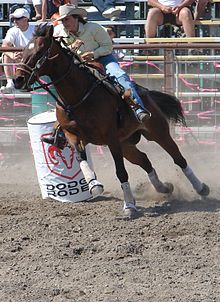
The Quarter horse is a powerful, sensitive breed. They respond only to the lightest touch on the reigns, but are among the most brilliant, agile performers. They are the breed used in rodeos, barrel racing, cattle roping, all activities that need precision and power.  Joe buys and sells lots of junk horses. Most cycle through rapidly. He has one that just keeps coming back. With each trade, Joe makes a little money. Ironically, this one is his favorite.  It’s a keeper and it’s a quarter horse.  He sells it and then re-buys it for a lower price when the new owner discovers that it is un-ridable. That’s because people who are used to less sensitive and responsive animals tend to horse them around – meaning that they use gross, rough jerks on the reigns and gouge with their feet. Quarter horses respond to rough treatment with an equally rough ride.

It takes me a while to process information like that. This morning I awoke with a lovely thought. Good people are a lot like a good quarter horse. They are bright, sensitive, hard-working, responsive to a light touch, but may buck under a rough hand. Because I sometimes view myself as ineffective, an unskilled horseman, I often feel that people don’t understand what I’m saying or respond as I would like.  When I feel that way, the tendency is to be less sensitive myself, to tug on the reigns too hard or dig in with the spurs. Almost inevitably, that brings on a rough ride.

That thought reminded me of Christ, quietly writing in the dirt.  A gentle suggestion, “let he who is without sin cast the first stone”.  The accusers who were ready to stone the adulterous woman melt away.  He turns to the woman and gently asks, “where are your accusers?” Then, I can imagine he said lovingly, almost in a whisper, “I don’t condemn you either. Go your way and sin no more”.

Good people are like a good quarter horse and the adulterous woman. Imperfect, sinful, like everyone else, but humble and sensitive, ready to respond to a gentle touch with power and grace. It’s a lesson I struggle with over and over. Today, I will try to remember Joe’s parable of the quarter horse and live with a lighter touch.

I am so thankful that I live with a constant, perfect example of the gentle touch, my dear wife, Becky.

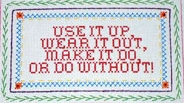
Use it up, Wear it Out, Make it do or Do Without

Tennessee Intentional Community

This was my mother’s mantra when I was little.  Having survived the great depression in her childhood, she was a raving evangelist of frugality.  That didn’t mean I was deprived in any way.  My Halloween costumes, made from pieces of this and that, were always extravagant pieces of art.  I was always the best dressed kid in my school, consistently walking away with the best costume award.

Speaking of school, when I decided to run for school president in the 6th grade, I easily trounced my opponents due entirely to my father’s artistic creativity.  He built an amazing, rotating sign from old wood scraps, a rotisserie motor, photos we developed in his basement dark room and his hand drawn Peanuts cartoons.  How could I lose with an endorsement from Charlie Brown?  Back in the day, that sign was so far ahead of its time, it became a sensation.

Some years lager, my wedding reception had a Hawaiian theme because my bride and I had lived in Hawaii as college students.  True to form, both my parents dialed up the heat.  My Dad created a replica of the church where we were married standing about eight feet tall.  The room was decorated with life-sized coconut trees and an outrigger canoe, all made from scavenged stuff, but looking like they came out of a Madison Avenue design studio.  The brides maids and grooms men wore authentic Hawaiian formal wear, made by my mother.  Hawaiian friends provided the entertainment.  They were willing to do the gig for free because they felt they owed my parents so much.

I guess that’s why this YouTube Video caught my attention.  Whether or not you buy into man-made global warming and the need to reduce our carbon footprint, it’s just way cooler to get the creative juices going and make great stuff out of almost nothing.  In our intentional community at the Village, we look for opportunities to be creative, together when possible, and as frugal as we can be.  It’s what I would call an abundant lifestyle.

Anyway, I hope this video inspires you to do more.  With some creativity, even a depression can be fun. 

Moral Chemistry

The Parable of the Good Samaritan. Other relig...

Good Samaritan

If there is one principle that the greatest sages, prophets, philosophers and religions throughout the ages agree on, it is the golden rule.

“Do unto others as you would have them do unto you.”  It is the foundation of moral behavior.

Cultures that foster the golden rule have a higher degree of trust, resulting in greater coöperation, productivity and wealth.

The Village on Sewanee Creek has three foundational principles:

  1. The Golden Rule
  2. Self-Sufficiency
  3. Personal Liberty and Accountability

Focus on these three principles creates an environment where harmony, trust and productivity can flourish.  But people are imperfect regardless of good intentions.  So the message of this TED talk is encouraging.  Above good intentions, there are physical explanations for different people’s ability to empathize and practice the golden rule.

Turns out that bio-chemistry plays a major role and there are things we can do to improve our own natural tendencies to live moral, harmonious lives.  I particularly like the concluding prescription.  Hope you enjoy this talk as much as I did. 

Best Preparedness Manual

A very wise man said, “perfect love casts out fear”  1 John 4:18

Another wise man said, “if you are prepared, you shall not fear”.

In a world rife with fear of many things, these two dictums are prescriptions for peace and harmony. Our motto is, “In harmony with people and nature” .   We seek to follow both of these prescriptions for peace.

I have frequently blogged about the need for communities to be bound together by a commitment to living the Golden Rule, the most basic manifestation of love towards fellow-man.  Communities where that is the dominant principle will do well during periods of social and economic chaos.

Top Ten rules for Self-Governance,   Neighborhood rules for a Sustainable lifestyleAustere but Without Fear, Antidote for an Economy of Fear, Top 9 Antidotes for Hard Times

But, there is another popular dictum that says, All you need is love” . . .  NOT!
Yes, it’s important to surround yourself with loving people, but regardless of how heartfelt the singing, kumbaya does not feed, clothe or shelter.  That’s where other forms of preparedness come in.   To cover ALL you need, combine personal preparedness, know-how and self-reliance in a like-minded community with a commitment to support, share and care.   Another name for that is the Village on Sewanee Creek.

My blog also has a lot of information on preparedness like  Top ten Self-Sufficiency and Survival Skills, and we periodically sponsor preparedness fairs and workshop  events open to the public,

Just as Holy Scripture is the manual for a life committed to love of fellow-man, there is a manual recognized by many as the final, comprehensive word on prepared, provident living.  It’s called the LDS Preparedness Manual and you can download it FREE here.

Follow this manual and you’re halfway there.

Inspiring Action


Watch this thought-provoking video.  Then scan through almost five years of my blog posts and see if you can answer this:

Why am I building this unique community in Tennessee?
Like Apple products mentioned in the video, it’s the reason people continue to buy land here at higher prices despite a terrible economy and a worse Real Estate Market.
Hint:  It’s not about the land.
See if you can boil my why down to a few words.  Then post it in a comment.

If  your why matches mine it could be worth cash towards your entry into the Village.