This year the thanksgiving holiday (and feelings that go with it) have been extended more than usual as I have focused on the blessing of being married for 25 years to an angel.
But I think it is difficult to stay in a thanksgiving mindset these days, not because times are hard, but because we still have so much (although perhaps less than we had a few years ago). As blogged elsewhere, the abundant life is more a state of mind than a state of having lots of material stuff. Now comes more rigorous thought from economists on why that is the case. Do you remember those boring lectures in Econ 101 about the theory of utility? Basically, the theory says with each additional (or marginal) thing we get, its marginal utility decreases. And with decreasing utility, so goes our thankfulness for it.
So Thoreau was right. The formula for optimizing thankfulness and therefore, Joy, is to minimize excess stuff and live in a state of mild deprivation.
Hmmm, deprivation. that sounds kind of bad doesn’t it? I have found that deprivation, in itself, doesn’t necessarily produce gratitude or joy any more than our greenhouse always produces the best vegetables. There are plenty of miserable poor people to attest to that and it takes more than just solar heat in the daytime to grow good produce. But, like the greenhouse, maintaining the right environment is important where, with some additional care and tending, the fruits of thankfulness and joy can be most rewarding.
I know this advice is falling on a lot of deaf ears. “Mild deprivation” doesn’t sound very appealing even with some quasi-scientific/Economic justification. OK, so try a dare based on the more traditional Biblical justification found in Proverbs 30:7-9.
Two things have I required of thee; deny me them not before I die: Remove far from me vanity and lies: give me neither poverty nor riches; feed me with food convenient for me: Lest I be full, and deny thee, and say, Who is the LORD? or lest I be poor, and steal, and take the name of my God in vain.
Economic theory confirmed in Scripture or the other way around? All I know is that this week, as I have focused my attention on being thankful for the simple, non-material things of value in my life, I have felt a deeper, lasting sense of peace. That feels pretty valuable right now.
Yesterday was a very special day for me.
Twenty-five years ago, I married the most wonderful girl in the world.
For 25 years, she has proved how wonderful she is by putting up with me through thick and thin, wealth and poverty, births and bereavements.
Five years ago she followed me into the wilderness to begin a totally new adventure, building a self-sustaining community. In that time, she has quietly raised the gardens, canned the fruit and veggies, ground the grain and baked the bread, fed the rabbits and chickens and scooped their poop, finished raising our kids, hosted numerous preparedness fairs and Village events, braved a cold winter while our house was built with four of us packed into our little fifth wheel trailer, helped build our house, handled the bills, served in the local food bank and church leadership, started a business making and selling women’s purses, researched hundreds of ways to become more self-sufficient, and cheerfully supported me in my crazy dreams and grouchy moods through it all.
If that’s not love I don’t know what is.
Several days ago I blogged about thanksgiving and gratitude. There is nothing and no one in this world I am more thankful for than my dear, eternal companion. She has literally saved my life, repeatedly. Day before yesterday, we sat down together to list 25 top memories commemorating our 25 years together. More than 100 recorded memories later, the pace slowed as we cuddled before the fire. The sun set through the trees. Darkness fell as we listened to the wind outside, the rain on the roof and the swelling creek. We realized that we had barely scratched the surface and agreed that this was the best way to celebrate an anniversary whether on a tight budget – or not.
As a follow-up to our exercise in reminiscing, we did some of the more traditional things too. We found a highly rated Thai restaurant in Chattanooga and relived, with our taste buds, one of our favorite memories. That was a fun one. In our second year together, she accompanied me on a business trip to Thailand when I was working on the business plan to develop 7-Eleven there. She was 7 months pregnant with our first child. I was busy all day every day, buried in spreadsheets, so she bravely set out by herself to explore Bangkok sites and traffic on a noisy, smelly tuk-tuk. Over spicy Thai dinners, we shared her adventures.
So we resolved to spend our anniversary and whatever other time it takes, expanding the list, filling in the details and sequencing it by year. When finished, it will be a gift to our children. It’s time for them to know more about our love affair and why they turned out so well.
Twenty five years has been but an eye blink compared to the eternity we plan to be together. But it’s an important milestone on the path where my love for this goddess of patience, kindness and quiet perseverance increases with each year. I am forever in her debt.
Fitting that our anniversary falls every year right after Thanksgiving, don’t you think?
The abundant life starts and ends with gratitude enabled by faith.
This day, Thanksgiving, has its foundation in traditions begun by the Pilgrims.
The occasion was a successful harvest after months of extreme hardship and deprivation. The Mayflower survivors invited the Indian king Massasoit to their celebration, and he came with ninety-some of his men. The Pilgrims provided waterfowl and turkey; the Indians added five deer. There were games and athletic contests, and even a joint militia drill. The celebration lasted three days. But they did not call the feast “Thanksgiving,” and the record does not mention prayers of thanks or any kind of worship service. Some historians question whether this “first Thanksgiving” was a religious celebration at all. But that’s because they don’t know the Pilgrims and what they really believed.
The pilgrims were children of the reformation, Christians seeking to live according to their best understanding of Christ’s teachings. They understood that God graciously declares guilty sinners righteous on the basis of Christ’s perfect obedience and his death, substituting his perfection for our imperfection, paying our debt by proxy and overcoming both spiritual and physical death for us. This gift of legally transferred righteousness is received by faith and such faith is itself the gift of a sovereign God. But they also knew that grace doesn’t end there. They, no less than the Reformers, had faced the obvious questions: “Why then should believers do good works? Doesn’t the doctrine of justification by faith, a free gift, lead to sloth and lawlessness?” Isn’t it OK to simply declare your faith, then enjoy a free ride?
The Pilgrim answer, and the answer of Scripture, involves the nature of saving faith and the work of the Spirit who grants it. To the extent that one comprehends and accepts Christ’s infinite gift of redemption, won through unfathomable pain, one cannot help but feel gratitude. Gratitude changes one’s heart. The depth of one’s gratitude determines the depth of one’s joy. The video that introduces this post shows how we can cultivate a sense of gratitude by noticing and focusing on the goodness of the gifts (blessings) we receive and how gratitude is inseparably connected with joy.
This is the very nature of joy. When we enjoy a thing, we are thankful for it. We praise the gift to the giver and so enjoy both.
“Thank you for this ring! It’s magnificent!”
“What a fantastic dinner! It was the best ever. Thank you.”
When we find joy in another human being, we show our joy and gratitude with words and actions. We praise and magnify the one we love. We are thankful to love and to be loved.
“I’m proud of you, son. You’re the best.”
“I thank God for you every day. My life wouldn’t be the same without you.”
“There’s no one else like you! I love you so much!”
Joy finds its fulfillment in thankfulness, in praise and thanksgiving. Silent joy is a contradiction. Mute appreciation isn’t really thanks. God requires our thanksgiving and our love so that our joy may be full. Shakespeare said it well, “They do not love that do not show their love.”
The spirit of thankfulness and joy are gifts that are cultivated by the Holy Spirit, who also gifts us with faith. These four gifts (faith, gratitude, love and joy) are inseparable, and they begin with faith. They work together. The fruit of true gratitude is a desire to give back in some meaningful way, not only in words of gratitude but also in deeds. The Holy Spirit gives the converted sinner a delight in serving God. And so, the circle is complete. Motivated by these gifts, one’s desire to work toward perfection, which is the love of God, increases. Long before Shakespeare, James said the same thing about the interconnected nature of faith, gratitude, love, and works, “Yea, a man may say, Thou hast faith, and I have works: shew me thy faith without thy works, and I will shew thee my faith by my works.” James 2:18
There is a perennial debate over whether salvation comes of faith or works. That debate introduces a needless semantic division amongst believers in Christ that is easily resolved with an understanding of the inseparability of the gifts from the natural consequences of those gifts truly appreciated and received. The core question is not whether we are saved by faith. It is, what is the quality of our faith? . . . or is my faith sufficient for salvation?
If it is true that the natural and inevitable consequences of true faith in Christ are gratitude, joy and a desire to serve, then it should be easy to measure the strength of one’s own faith to salvation. I am careful here to say, “one’s own faith” as feelings and desires are matters of the heart, known only to oneself and God. Each of us acts on those feelings in different ways that we believe will be the best ways to serve and may not be apparent to others. Hence, the command that we withhold judgment of others.
As I celebrate this day designated for Thanksgiving, I am prompted to evaluate the quality of my gifts. “For what doth it profit a man if a gift is bestowed upon him, and he receive not the gift? Behold, he rejoices not in that which is given unto him, neither rejoices in him who is the giver of the gift.” (D&C 88:33) Here is the test of whether I have actually received the gift . . . (the gift of salvation through faith):
1. Is my heart overflowing with thankfulness for my gifts?
2. Is my gratitude evidenced by deep, abiding joy that transcends the fear, pain and difficulties of this day?
3. Am I filled with a joyful desire to show my gratitude through returning obedience and service to God by serving my fellow man?
If the answer to any of these questions is questionable, then the question remains, “have I received the gift of salvation through faith if gratitude, joy and love are obviously lacking?” If not, as Shakespeare might have said it, they have not faith who do not show their faith.
Comfort and Joy
That gift of joy and comfort was not meant to be enjoyed only after this life is over. This life is hard, often painful. But Christ promised, “…my yoke is easy, and my burden is light.” Matt 11:30 That is the promise of joy and comfort now.
The Pilgrims and Puritans are almost always portrayed as obsessive killjoys and miserable downers. There’s little truth in that image. Joy wasn’t an afterthought for our Pilgrim forefathers. For them, joy stood at the beginning, in the center, and at the end as a natural product of faith. For them, God was joy, even when they were hungry and that same joy expressed itself in thankfulness. For the Pilgrims, a day of rejoicing is necessarily a day of thanksgiving. And throughout Scripture that sort of rejoicing means feasting, fellowship, and worship. The Pilgrims were deeply committed Christians who had braved an ocean and a wilderness to seek and serve God. When they rejoiced together, it would not–could not–be other than a time of thanksgiving to their Lord and Savior. Yes, the Pilgrims gave thanks to God and so should all of us.
On this day of thanksgiving, my wish for all is that our burdens will be light and easy, that our joy and gratitude will be full as we contemplate the eternal blessings that are our gifts from God and that we will feel compelled to share that joy, love and gratitude with others.
It’s the buzzword of the decade. Wrapped up in that word are other buzzwords like “green” and “eco-friendly“. But these words represent passing fads. The bedrock reality underlying sustainability is a much more prosaic, boring, yet little understood word, “Economics”. It’s a terrifying word. It suggests complex supply / demand curves and the inscrutable workings of inscrutable institutions like the Federal Reserve, the IMF and the World Bank. People are increasingly frustrated and angry with the “banksters”, politicians and other manipulators of “the economy”.
Take a deep breath. It’s actually quite simple at our level. Make more than you spend. That’s it. Take charge of your life. Live frugally. Be industrious. Build and create.
That’s not to say that one need not be aware of the many external factors that weigh in on the spending side of the equation. America’s favorite holiday, Thanksgiving, is next week.
The Washington Post informs usThanksgiving Dinner this year will cost 13% more than last year. Yup, inflation is accelerating. It’s about to get a lot worse. Thankfully, I’ll be keeping more of what most people will be spending on a Thanksgiving feast this year. We raise our own vegetables and poultry!
We’ll be enjoying some non-traditional, but delicious green tomato pie, remnants of our summer garden after a hard freeze last week. Interesting how that word “Sustainability” is increasingly associated with another buzzword, “self-sufficiency“. Keeping more of your output is inseparably connected with controlling both your income and outgo. And that’s what self-sufficiency is all about – personal independence and control.
The good life is about more than financial economics. Peace of mind is an even bigger part. That’s why self-sufficiency, the sense that I’m in control of my destiny is so closely connected with sustainability and economics, which are all about achieving an abundant life. Abundance can be in things, but has a lot more to do with state of mind. It’s hard to have one without the other.
It’s not easy to be self-sufficient and independent. It takes forethought, planning, intelligence and work, all values that were common to the early American ethic that seem to have become lost in the generations of excess. Thankfully, those values are coming back into fashion.
One of the obvious elements to consider in the outgo part of the equation is the general cost of living. We selected rural Tennessee as the place to buy land and put down our homestead. Tennessee offers the lowest overall cost of living in the U.S. For thinking people who want an abundant life, keeping more for themselves of what they produce, it’s an obvious choice.
For thinking people, there are many ways to cut costs beyond the current coupon fad. Coupons only tie people to existing products and systems that reduce your control of your life. Coupons might be put to better use as band-aids with a little stick-em. That’s all they are anyway; short-term relief for a chronic disease. Band-aids can be useful, but not for long. In the Village on Sewanee Creek, an intelligent “Intentional Community“, people work together. Cooperative effort on gardens, homes and other projects increases productivity and reduces costs. We try to standardize on equipment and vehicles. That way, it’s easier to repair things (increased productivity) and maintain extra parts (reduced, shared costs on a few critical items). This kind of coöperation takes extra thought, extra preparation, extra commitment. That’s why most people don’t do it. That’s why most people don’t keep a lot of what they make.
At the end of the day, economics is pretty simple at our level. Keep more than you spend. Spend only on things of lasting value. Work with your neighbors. It’s all natural law. We call it … “in harmony with people and nature”. It’s our motto and it’s working to create a more sustainable, abundant life for people in the Village.
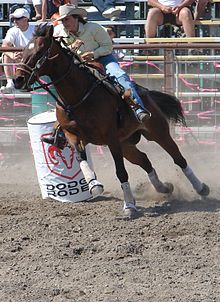
Many of you who have visited the Village, if you were lucky, got to meet Joe. He’s a local who does a lot of work here. Joe is an expert with horses as well as an expert trader. A few days ago, knowing nothing about horses myself, Joe told me a little about his favorite, the quarter horse.
According to Joe: The Quarter horse is a powerful, sensitive breed. They respond only to the lightest touch on the reigns, but are among the most brilliant, agile performers. They are the breed used in rodeos, barrel racing, cattle roping, all activities that need precision and power. Joe buys and sells lots of junk horses. Most cycle through rapidly. He has one that just keeps coming back. With each trade, Joe makes a little money. Ironically, this one is his favorite. It’s a keeper and it’s a quarter horse. He sells it and then re-buys it for a lower price when the new owner discovers that it is un-ridable. That’s because people who are used to less sensitive and responsive animals tend to horse them around – meaning that they use gross, rough jerks on the reigns and gouge with their feet. Quarter horses respond to rough treatment with an equally rough ride.
It takes me a while to process information like that. This morning I awoke with a lovely thought. Good people are a lot like a good quarter horse. They are bright, sensitive, hard-working, responsive to a light touch, but may buck under a rough hand. Because I sometimes view myself as ineffective, an unskilled horseman, I often feel that people don’t understand what I’m saying or respond as I would like. When I feel that way, the tendency is to be less sensitive myself, to tug on the reigns too hard or dig in with the spurs. Almost inevitably, that brings on a rough ride.
That thought reminded me of Christ, quietly writing in the dirt. A gentle suggestion, “let he who is without sin cast the first stone”. The accusers who were ready to stone the adulterous woman melt away. He turns to the woman and gently asks, “where are your accusers?” Then, I can imagine he said lovingly, almost in a whisper, “I don’t condemn you either. Go your way and sin no more”.
Good people are like a good quarter horse and the adulterous woman. Imperfect, sinful, like everyone else, but humble and sensitive, ready to respond to a gentle touch with power and grace. It’s a lesson I struggle with over and over. Today, I will try to remember Joe’s parable of the quarter horse and live with a lighter touch.
I am so thankful that I live with a constant, perfect example of the gentle touch, my dear wife, Becky.
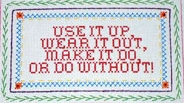
This was my mother’s mantra when I was little. Having survived the great depression in her childhood, she was a raving evangelist of frugality. That didn’t mean I was deprived in any way. My Halloween costumes, made from pieces of this and that, were always extravagant pieces of art. I was always the best dressed kid in my school, consistently walking away with the best costume award.
Speaking of school, when I decided to run for school president in the 6th grade, I easily trounced my opponents due entirely to my father’s artistic creativity. He built an amazing, rotating sign from old wood scraps, a rotisserie motor, photos we developed in his basement dark room and his hand drawn Peanuts cartoons. How could I lose with an endorsement from Charlie Brown? Back in the day, that sign was so far ahead of its time, it became a sensation.
Some years lager, my wedding reception had a Hawaiian theme because my bride and I had lived in Hawaii as college students. True to form, both my parents dialed up the heat. My Dad created a replica of the church where we were married standing about eight feet tall. The room was decorated with life-sized coconut trees and an outrigger canoe, all made from scavenged stuff, but looking like they came out of a Madison Avenue design studio. The brides maids and grooms men wore authentic Hawaiian formal wear, made by my mother. Hawaiian friends provided the entertainment. They were willing to do the gig for free because they felt they owed my parents so much.
I guess that’s why this YouTube Video caught my attention. Whether or not you buy into man-made global warming and the need to reduce our carbon footprint, it’s just way cooler to get the creative juices going and make great stuff out of almost nothing. In our intentional community at the Village, we look for opportunities to be creative, together when possible, and as frugal as we can be. It’s what I would call an abundant lifestyle.
Anyway, I hope this video inspires you to do more. With some creativity, even a depression can be fun.
Focus on these three principles creates an environment where harmony, trust and productivity can flourish. But people are imperfect regardless of good intentions. So the message of this TED talk is encouraging. Above good intentions, there are physical explanations for different people’s ability to empathize and practice the golden rule.
Turns out that bio-chemistry plays a major role and there are things we can do to improve our own natural tendencies to live moral, harmonious lives. I particularly like the concluding prescription. Hope you enjoy this talk as much as I did.
Whether it’s population or economic growth, exponential growth inevitably ends with bust and collapse.
Here is a video that explains the impact of exponential growth.
World news is fixated on the UN’s pronouncement that we are passing the 7 billion population mark.
Japan is the poster child, but Russia, Europe and even the US are on the list of countries now or soon unable to support aging populations. For those interested in seeing what the future looks like for countries with aging populations, check out this blog on the rusting of Japan. Written from the perspective of an affluent expat financial analyst who is fluent in the Japanese language and culture, I find it fascinating in an eerie-dreary sort of way.
While energy resource depletion (aka Peak Oil) is one of the fundamental tectonic plates shifting beneath our feet, population demographics is another one.
Demographics defined my thirty year career. Perhaps nothing is as sensitive to or exposes demographics so clearly as how people eat. I was at the forefront of exporting American food service and retail chains to emerging nations around the world. I successfully developed well-known brands like IHOP, Papa John’s, Pizza Inn, 7-Eleven, Dunkin’ Donuts, Baskin-Robbins and Blockbuster Videoin over fifty countries.
Baskin-Robbins Korea 1 of thousands
In the 70’s, it was Japan. There was a massive demographic shift as young mothers entered the workforce (similar to what had occurred in the prior 15 years in the USA. Japan was becoming more affluent. Young families with growing incomes and less time wanted convenient food options. Japan was mimicking America’s infatuation with chain restaurants. Japan’s growth curve was steep and so was the decline.
None of the brands I represented had the marketing or financial clout of McDonald’s, so I had to be sensitive to targeting only countries that had youthful, aspiring populations, mostly in developing countries where success was assured. For me, that almost always meant youth in Asia. Our greatest successes were in places like Japan (in the early days), Korea, Thailand, the Philippines, Saudi Arabia, Kuwait and other middle Eastern countries and more recently Eastern Europe, China and India. Developing Latin American Countries
I opened this shop in Pakistan
were OK for inexpensive products like Dunkin’ Donuts). Western Europe was always a tough nut to crack. My career taught me to be intuitively sensitive to population and economic demographics. Lesson number one.
Lesson number two was equally grounded in fundamental tectonic fact as expressed in the phrases “watch where the feet point” and “follow the money”. In the politically charged, sometimes back-stabbing corporate world of a senior executive, it was often difficult to know what alliances would form to support or betray you. Even hero de jour, Steve Jobs, was thrown out of the company he founded. Those things shift quickly in the winds of expediency and personal interests. But if you have your ear to the ground you can always sense the grinding at the tectonic level. That is where the truth is.
As world resources become increasingly strained and rich nations slide into poverty, I see a growing call coming for population control measures that will target the less productive members of society, the old and infirm. It will be justified as “scientific” and natural survival of the fittest. Alex Jones and commentators like him attribute that to the “New World Order” elites, rising fascism, communism and the “banksters”. The mass media counters by marginalizing that rhetoric as nut-case “conspiracy theory” or “fear mongering”. It is hard to forecast who will be the leaders, the movers and shakers in a radically changing world. But it is clear that the world is about to shake because at the tectonic level (demographics and resources) there are unmistakable clues to the inevitable. Leaders like Hitler are impotent by themselves. Their power derives from their ability to tap into the tectonic forces of the masses. Demographic tectonics tells me there will be a mass of people clamoring for solutions. History tells me that someone like Hitler will offer solutions. The solution to over-population and under supply of resources is inevitably eugenics.
Under the din of claims, counter-claims and fault-finding, the tectonic plates of the masses continue to shift. Regardless of where one hangs the blame, earthquakes, like nature in general, move without regard to our feeble attempts to explain them. It seems an ironic twist of language that my early career was defined by the potential of youth in Asia, while in later life I am thinking more about the potential for euthanasia. My early analysis of the demographic potential of “youth-in-Asia” led me to respond correctly and productively to the needs of the masses by developing thousands of restaurants and retail outlets in emerging nations. Later analysis of demographic potential for euthanasia leads me to the conclusion that in a eugenic world where only the fit and productive survive, we had better get on with the job of being not only fit, but productive and self-sufficient.
My baby boomer generation has mortgaged future generations with debt that cannot be repaid. Those generations will default on that debt just as surely as sub-prime mortgagees did.




 the Village on Sewanee Creek